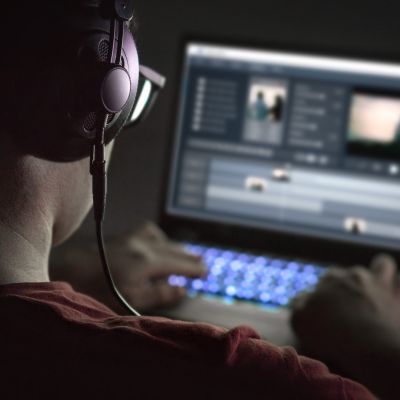


BSL and ASL interpreting are incredibly important in terms of making video accessible to users of sign language as is editing BSL videos.
In-vision sign language interpreting refers to the visible presence of a sign language interpreter within a video or broadcast, typically displayed in a corner of the screen. In-vision interpreting enables deaf and hard of hearing viewers to access spoken content in real time through British Sign Language (BSL), American Sign Language (ASL), or another sign language. The interpreter is filmed simultaneously with the main video content so that essential dialogue, information and tone are conveyed as much in sync with the source content as possible.
The interpreter is not clearly visible or is obscured by graphics or other on-screen elements
It’s essential that the BSL interpreter remains clearly visible at all times, without being obscured by graphics or video backgrounds. If the interpreter is hidden or masked by on-screen elements, deaf and hard of hearing viewers may struggle to follow the interpreted content, resulting in lost information and reduced accessibility. Ensuring the interpreter is unobstructed allows for seamless communication and guarantees that everyone can fully engage with the material.
Ensuring full Video accessibility for blind
and visually Impaired Audiences
Poor lighting, inadequate camera angles, or low video quality
Poor lighting can make it difficult for viewers to clearly see the interpreter’s facial expressions, hand movements, and gestures, which are all vital aspects of sign language communication. Inadequate camera angles may obscure the interpreter’s hands or body, preventing viewers from fully understanding the signs being conveyed.
Similarly, low video quality, such as pixelation or blurriness, further diminishes the clarity of the interpreter’s actions, especially fine motor hand movements, making it challenging for deaf and hard of hearing audiences to follow the message accurately. These technical issues undermine the effectiveness of in-vision sign language interpreting, reducing accessibility and engagement for those relying on visual cues.
The interpreter is not sufficiently synchronised with the spoken content
If a BSL interpreter is not properly timed with the spoken content in the video, viewers who rely on sign language may experience confusion and frustration. Accurate synchronisation ensures that deaf and hard of hearing audiences receive information at the same moment as hearing viewers, allowing them to fully understand jokes, emotional cues, and critical instructions without delay.
Any significant lag or mismatch between the interpreter and the audio can lead to misunderstandings or missed content, especially where there is fast speech important complementary graphics.
So there you have it, a quick and easy guide to editing editing BSL videos. If you would like more information on this or have a video project which you would like to add BSL or ASL to, then why not get your quote today.
Ready to make your videos accessible?
Get fast turnarounds, if you have a project you need subtitled, get your project started today.