

With advancements in AI, more and more producers are trusting AI services in producing captions for their content. While AI captioning can be a reasonable option for producers with simple online projects who are on a tight budget or who have time constraints, there are a number of reasons why it’s a great idea to have your AI captions professionally edited.
In this blog, we’re talking about the main mistakes that AI captions make, how a professional caption editor can fix those mistakes and why human written captions are still always best!
AI Captioning Error #1 - Inaccurate transcription of spoken words due to accent, dialects or audio quality.
The impact – Errors in transcription can result in captions which are incorrect at best. Even small transcription mistakes can have a huge impact, rendering entire sentences nonsensical, causing confusion, offense or in some cases, outright hilarity.
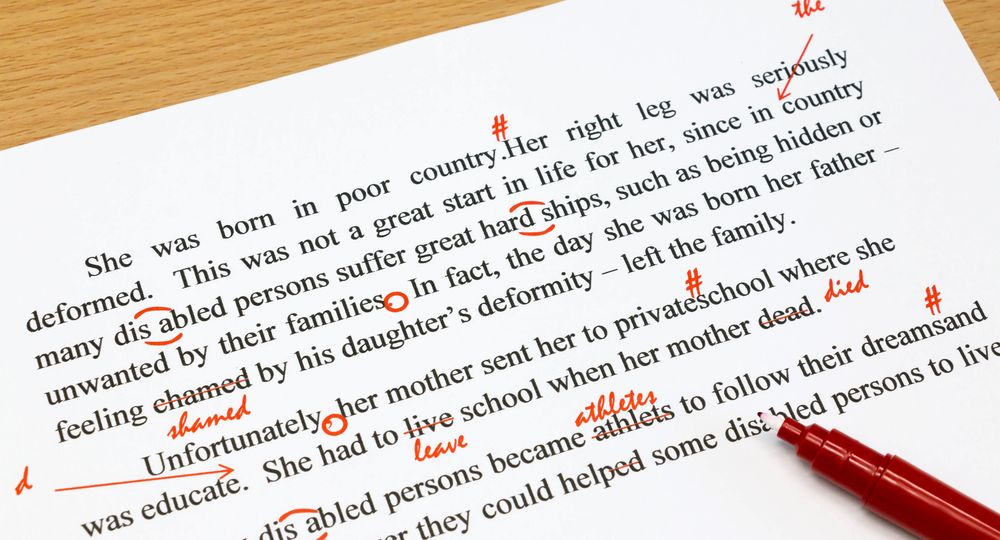
AI Caption Editing – Human transcriptionists transcribe with meaning in mind. Even when a word is mispronounced or misspoken, a solid understanding of context means that a human typist will fix errors, using correct spellings. Additionally, for regional dialects and accents, local transcriptionists are able to listen more effectively to decipher words.
AI Captioning Error #2 - Omission of background sounds or relevant non-verabal cues.
The impact – Leaving out descriptions of sound effects and necessary information for Deaf and Hard of Hearing viewers, such as speaker identifications and labelling for narration, can leave audiences confused and ‘left out of the loop’ on what’s actually going on in a video.
AI Caption Editing – Human editors and subtitle checkers can work through subtitle files to add in important sound effects, tweak formatting and add tags and additional information for hearing impaired audiences. They can also remove unnecessary descriptions that AI captions sometimes add, such as generic captions describing ‘MUSIC’ where there possibly is none, or more information is required, such as ‘SUSPENSEFUL MUSIC’. Sound effects descriptions and other elements for the Deaf and Hard of Hearing are absolutely crucial in professional closed captioning.
AI Captioning Error #3 - Improper punctuation, which can alter the intended meaning.
The impact – Because AI is unable to truly understand dialogue, automated transcriptions often have subpar punctuation. Typically, sentences can wind up being too short and/or with commas in nonsensical places where they are added to reflect a pause in speech rather than helping with linguistic meaning. In addition, AI doesn’t always pick up on a change of speaker. This means that sometimes, a sentence may run on as if it were spoken by one person, when it is in fact, multiple speakers and should be split into two sentences.
AI Caption Editing – Proper punctuation is massively important in subtitles. A professional AI caption editor will work through punctuation and use it to more effectively split subtitles, helping not only with understanding of the captions, but also with the pace in which they are read. For instance, the use of ellipsis (…) within captions are best used to indicate a long pause and help with establishing the tone of dialogue.
Contact us!
AI Captioning Error #4 - Timing errors, where captions appear too early or too late compared to the audio.
The impact – Captions appearing too early, too late or lingering across long pauses can affect the rhythm of a video and leave viewers frustrated as they wait to hear what’s being said or for a speaker to finish speech that’s already been subtitled. Similarly, many automated captions don’t take reading speeds into consideration. Subtitles can inconsistently remain onscreen for too short a time, meaning audiences don’t have time to read and digest the meaning of what’s being said. When fast captions mix with slow ones, it takes attention away from the meaning of the video content.
AI Caption Editing – A professional caption editor will work to consistent reading speeds, especially where broadcast subtitling specifications are required. Automated captions should be tweaked to take into account the best place to split subtitles in terms of punctuation, grammar, syntax and any natural pauses in dialogue. Similarly, reading speeds should be edited in captions to be between 220-250wpm for adults and 160-180wpm for children.
So there you have it, a quick and easy guide on checking, correcting and editing your AI captions. Remember AI Captions are not always perfect and here at Capital Captions we always do a great job on checking and editing AI captions to make sure that what your actors say in the movie or video is what that captions read in the subtitles.
If you would like to get you captions proofread today then why not click below to get your quote.
Ready to make your videos accessible?
Get fast turnarounds, if you have a project you need subtitled, get your project started today.