


Whilst Capital Captions currently steer clear of AI captioning as part of our human-loving ethos, we regularly run quality checks and proofreading on automated captions for our clients. This blog includes our professional checklist on the most important aspects to check and amend on closed captions when working on QC of AI captions.
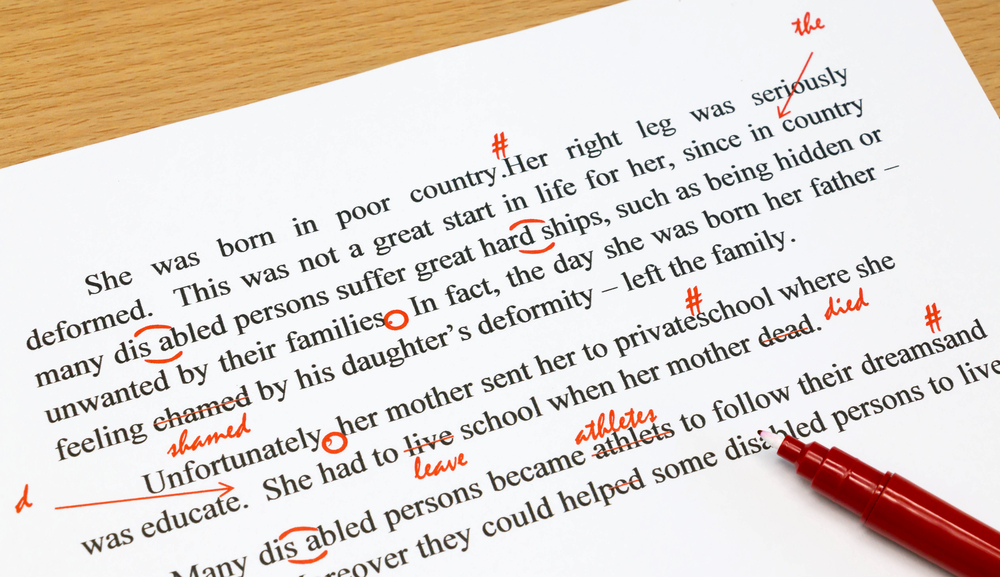
Confirm Caption Spellings, Correcting Spellings and Mishears
For something labelled as, ‘Artificial Intelligence’, AI isn’t really all that intelligent! Automated subtitles can often have very strange mishears within the transcription. A human will watch a video or listen to a speaker and will often fill in blanks of poor audio quality, overspeaking or mumbling by using their common sense to work out what that word is likely to be. The first step in running QC on AI captions is to check the accuracy of the dialogue transcription.
Check Captions for Language Consistency
Often, AI captions will be generated in American English. If you require British English spellings, it’s important to work through the caption file to ensure all spellings are correct according to your audience, i.e. British English captions versus US English captions.
- Correcting Spellings
- Language Consistency
- Research for Accuracy
- Adhere to Guidelines
- Charachter Limits
- Reading Speeds
- Subtitle Positioning
Split Subtitles More Naturally
When AI captions are created, the text often runs to the maximum character limits and then splits to the next subtitle whenever the lines are full. This means the subtitles don’t flow as well, as the breaks don’t take account of long pauses, ends of sentences, or even new speakers chipping in, especially if the voices are similar. A professional should edit AI captions to ensure that most captions start and finish as full sentences where possible, or at least split at a sensible moment.
Research for Accuracy
Research is a huge part of professional transcription. For certain specialist videos, one of the most important things to quality check within AI captions is spelling accuracy in this respect. In conferences, for instance, many names of staff may be mentioned and AI can only take a guess at the most common spelling names, which is all too often incorrect. (Should it be Catherine, Katherine or Kathryn…?) Similarly, jargon can often be used in medical or technical videos, with acronyms spoken as if they are real words (e.g. FTSE becomes footsy!)
Captions should be as close to original content as possible and written verbatim. Dialogue must not be censored.
Occasional truncation or editing of speech is acceptable where there is a significant conflict with reading speed and/or synchronisation
Sound Effects, Speaker Tags and Elements for SDH (Deaf and Hard of Hearing)
Subtitles are often transcribed and timed using AI captioning programmes, but when it comes to ensuring accessibility for Deaf and Hard of Hearing audiences, professional editing is a must. Sound effects should be added into AI subtitles to cover any sounds that give context and meaning to the video. Also, speakers should be correctly identified if they are speaking offscreen and formatting, such as italics, should be used to indicate elements like narration. Whilst AI can try at this, it’s incredibly inaccurate. (Just turn on YouTube auto-captions and see how many times a sound is strangely transcribed as, ‘Heat. Heat’.)
Adhere to Guidelines (character limits, reading speeds and encoding)
In a similar vein to splitting subtitles, professional quality captions should follow certain standards to ensure true accessibility. Different formats will be required according to the streaming platform or broadcaster, and full checks need to be run through to ensure compliance. These can involve differences in caption length (32 characters for SCC, 42 characters for STL…) Many characters are also incompatible depending on language and subtitle format, and these need to be quality checked and amended in order for captions to function properly. A professional AI quality checking captions and proofreading service will address all of the issues that may arise in terms of caption format and distribution guidelines.
Work on Subtitle Positioning
We have yet to see an AI captioning system that knows to move captions up and down to avoid onscreen text and/or important graphics. Whether or not such a system exists, it’s at best rare and at worst, inaccurate. Professional subtitles need to move up or down the screen in order to avoid text clashes. Quality Checking Captions is so much more than just checking for spelling mistakes. Placements and changes in font colour are also invaluable in identifying speakers, so let’s get to checking that AI!
So there you have it, our fully comprehensive guide to quality checking captions. Remember if you have captionis already and are not sure whether the quality is strictly there and would like a professional captioning company to make sure everything is in top form, then why not contact us today and see what we can offer.
Ready to make your videos accessible?
Get fast turnarounds, if you have a project you need subtitled, get your project started today.