
Closed captions are created for deaf and hard of hearing audiences. The principle of using closed captions is to ensure all speech and sound is accessible to a deaf audience, and to ensure any relevant contextual information is also supplied (e.g. identification of speakers). The true accessibility of video closed captions can be largely effected by formatting guidelines, styles and specifications. When creating captions, the following formatting video closed caption formatting elements should be considered.
The choice of closed caption transition style you choose is up to you, but please bear in mind, different production companies or broadcasters may have specific subtitle transitions that they expect to be implemented for all of their videos.

Vertical Positioning of Video Closed Captions
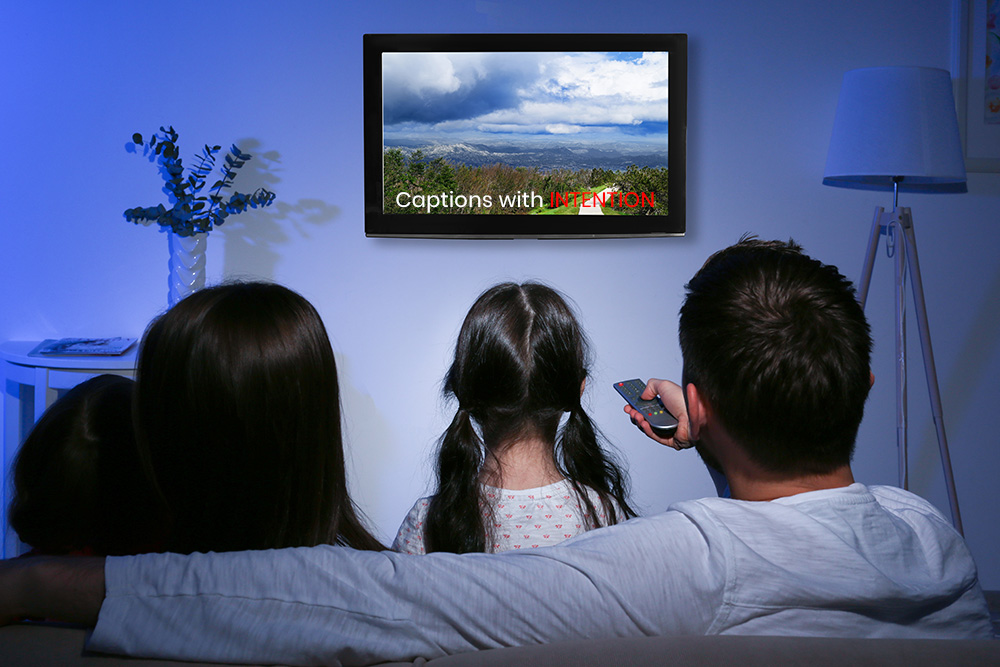
Changes in the position and placement of closed captions can create a better experience for deaf or hard of hearing viewers. Traditionally, closed captions are placed at the bottom of the screen, in a centralised position.
This is considered the best placement to allow as little visual distraction to the video as possible. However, video closed captions may need to be re positioned in some cases; such as when there is text or information present in the video that is being obstructed by the subtitle. Some caption formats allow for measured and specific re-positioning of on-screen text; others allow for options which include text at the bottom, top or centre of the screen; whereas some formats do not allow caption positioning at all.
Ready to make your videos accessible?
Get fast turnarounds, if you have a project you need subtitled, get your project started today.